Collection of Business Technology and He: A Strategic Asset for Modern Digital Creation
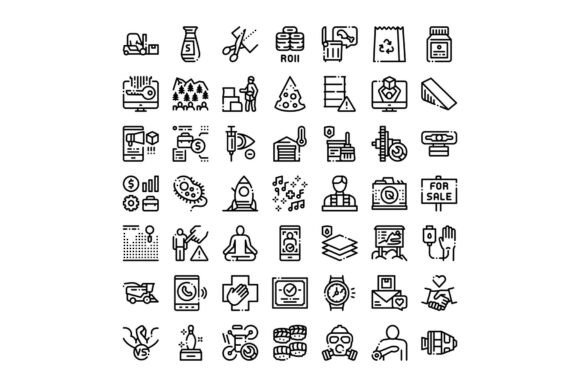
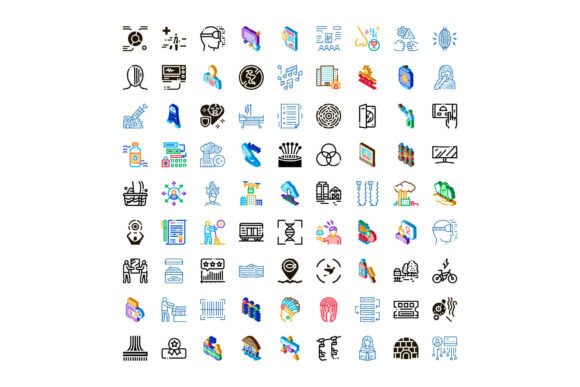
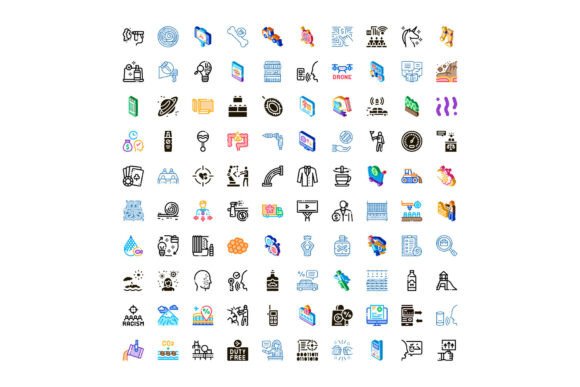
In today’s fast-paced digital landscape, visual clarity isn’t just an aesthetic preference—it’s a functional necessity. Whether you’re launching a SaaS dashboard, designing a health-tech presentation, or building an investor-facing pitch deck, the icons you choose communicate credibility, intention, and fluency with contemporary design language. At the center of this shift stands the Collection of Business Technology and He: a thoughtfully curated, large collection of versatile vector icons spanning business, technology, health, science, lifestyle, and everyday objects—engineered for modern apps, websites, presentations, and infographics.
What Is the Collection of Business Technology and He?
The Collection of Business Technology and He is not a generic icon pack. It’s a purpose-built visual system—one that reflects how professionals actually work today. Unlike legacy libraries organized by arbitrary categories or outdated metaphors (think floppy disks for “save” or fax machines for “contact”), this collection prioritizes semantic accuracy and contextual resonance. Each icon is designed with scalability, consistency, and accessibility in mind—optimized for high-DPI displays, responsive layouts, and WCAG-compliant contrast ratios.
Its scope is intentionally broad yet tightly focused: icons for AI model training pipelines sit alongside those for telehealth consultations; renewable energy dashboards share stylistic harmony with personal finance trackers; even niche concepts like “data anonymization,” “clinical trial phases,” or “sustainable supply chain mapping” are represented—not as afterthoughts, but as first-class visual elements. This reflects a deeper philosophy: that iconography must evolve in lockstep with domain-specific literacy across industries.
Why It Aligns With Today’s Creative and Operational Realities
Three converging trends make the Collection of Business Technology and He especially timely.
1. The Rise of Cross-Disciplinary Collaboration
Product teams no longer operate in silos. A fintech startup might include behavioral economists, frontend engineers, clinical advisors, and UX researchers—all contributing to a single interface. When stakeholders from diverse backgrounds review wireframes or prototypes, shared visual vocabulary becomes critical. Icons from the Collection of Business Technology and He reduce cognitive load by offering instantly legible, domain-accurate representations—whether it’s a stylized DNA helix for genomics analytics or a modular battery icon for EV charging infrastructure.
2. Accelerated Content Velocity Across Channels
Marketers now produce assets across 7+ channels—from LinkedIn carousels and Notion docs to embedded web dashboards and investor PDFs. Reusing the same icon set across platforms ensures brand coherence without redesign overhead. Because the collection delivers SVGs with clean paths and consistent stroke weights—and includes Figma, Sketch, and Adobe XD plugins—teams avoid version drift, inconsistent scaling, or manual asset conversion. One designer can export a 24px icon for a mobile app button and a 120px variant for a keynote slide—both retaining crisp fidelity and semantic alignment.
3. Growing Demand for Inclusive, Future-Ready Visual Language
Modern audiences expect representation—not just in imagery, but in conceptual framing. The Collection of Business Technology and He avoids culturally narrow tropes (e.g., using only Western office scenes to represent “productivity”) and instead offers adaptable, neutral forms: gender-inclusive avatars, non-binary healthcare symbols, scalable representations of remote and hybrid workflows, and icons reflecting global sustainability standards (like ISO 14001-aligned environmental metrics). This isn’t performative inclusivity—it’s operational foresight. As regulations tighten around digital accessibility and ESG reporting, having a compliant, extensible icon system becomes part of technical due diligence.
Practical Impact Across Roles
The value of the Collection of Business Technology and He manifests differently—but consistently—across professional roles:
- Entrepreneurs and founders use it to accelerate MVP development: embedding consistent, professional-grade icons into Figma prototypes helps secure early user feedback and investor confidence—without hiring a dedicated illustrator.
- Freelance designers and agencies leverage its modularity to maintain visual continuity across client projects—switching seamlessly from a cybersecurity whitepaper to a wellness app UI, all while preserving their own design signature through color and layout, not icon reinvention.
- Marketing and growth teams rely on its presentation-ready variants to build high-conversion landing pages and sales decks. For example, pairing an icon for “real-time API monitoring” with a concise stat (“99.99% uptime”) creates immediate conceptual anchoring—more effective than text alone.
- Developers and product managers integrate SVG sprites directly into React or Vue components, reducing bundle size versus raster alternatives and enabling dynamic theming (e.g., switching between light/dark mode icons via CSS variables).
- Academic and policy communicators use its science and health icons to visualize complex systems—like illustrating vaccine distribution logistics or climate modeling workflows—in public-facing infographics that retain scientific rigor without sacrificing readability.
Beyond Aesthetics: How It Supports Evolving Workflows
Icon usage has shifted from decoration to documentation. In tools like Miro, Notion, and Linear, icons function as lightweight metadata—tagging priorities, status, or ownership. The Collection of Business Technology and He supports this evolution with deliberate naming conventions (icon-data-encryption-lock, icon-remote-team-huddle) and machine-readable metadata, enabling searchability and automation. Some teams even pair icons with JSON-LD schema markup to improve SEO for explainer pages—so a blog post about “AI ethics frameworks” renders with a relevant, indexed icon in rich results.
Moreover, its vector-first architecture anticipates upcoming platform capabilities. As browsers improve support for SVG filters and declarative animations, icons from this collection can be enhanced with subtle micro-interactions—pulse on hover for actionable items, morph transitions between related states (e.g., “draft” → “review” → “published”)—all without external dependencies.
Contextual Relevance Over Generic Utility
What distinguishes the Collection of Business Technology and He from broader market offerings is its refusal to treat icons as isolated units. Instead, it treats them as nodes in a semantic network. Consider the icon for “patient consent workflow”: it doesn’t stand alone. It’s visually and conceptually linked to adjacent icons—“HIPAA compliance badge,” “digital signature field,” “audit trail timeline”—forming a cohesive visual grammar for healthcare software. This interconnectedness mirrors how users actually think: not in isolated nouns, but in relational systems.
This approach also future-proofs adoption. As new domains emerge—quantum computing interfaces, decentralized identity management, regenerative agriculture dashboards—the collection’s underlying design principles (modular construction, scalable abstraction, domain-specific fidelity) allow for seamless expansion—without compromising consistency.
A Foundation, Not a Finish Line
No icon set replaces strategic thinking—but the Collection of Business Technology and He removes friction from execution so professionals can invest more energy where it matters most: clarifying intent, refining logic, and deepening user understanding. It reflects a maturing industry standard: visual assets are no longer “nice-to-have” polish, but structural components of digital trust, comprehension, and scalability.
For creators building for complexity—and for audiences increasingly fluent in cross-domain concepts—this collection offers more than variety. It offers coherence. More than speed—it offers precision. And more than aesthetics—it offers authority.
As interfaces grow more intelligent, distributed, and human-centered, the icons we choose will continue to serve as quiet ambassadors of our values, expertise, and vision. The Collection of Business Technology and He doesn’t just keep pace with that evolution—it helps define its visual grammar.